
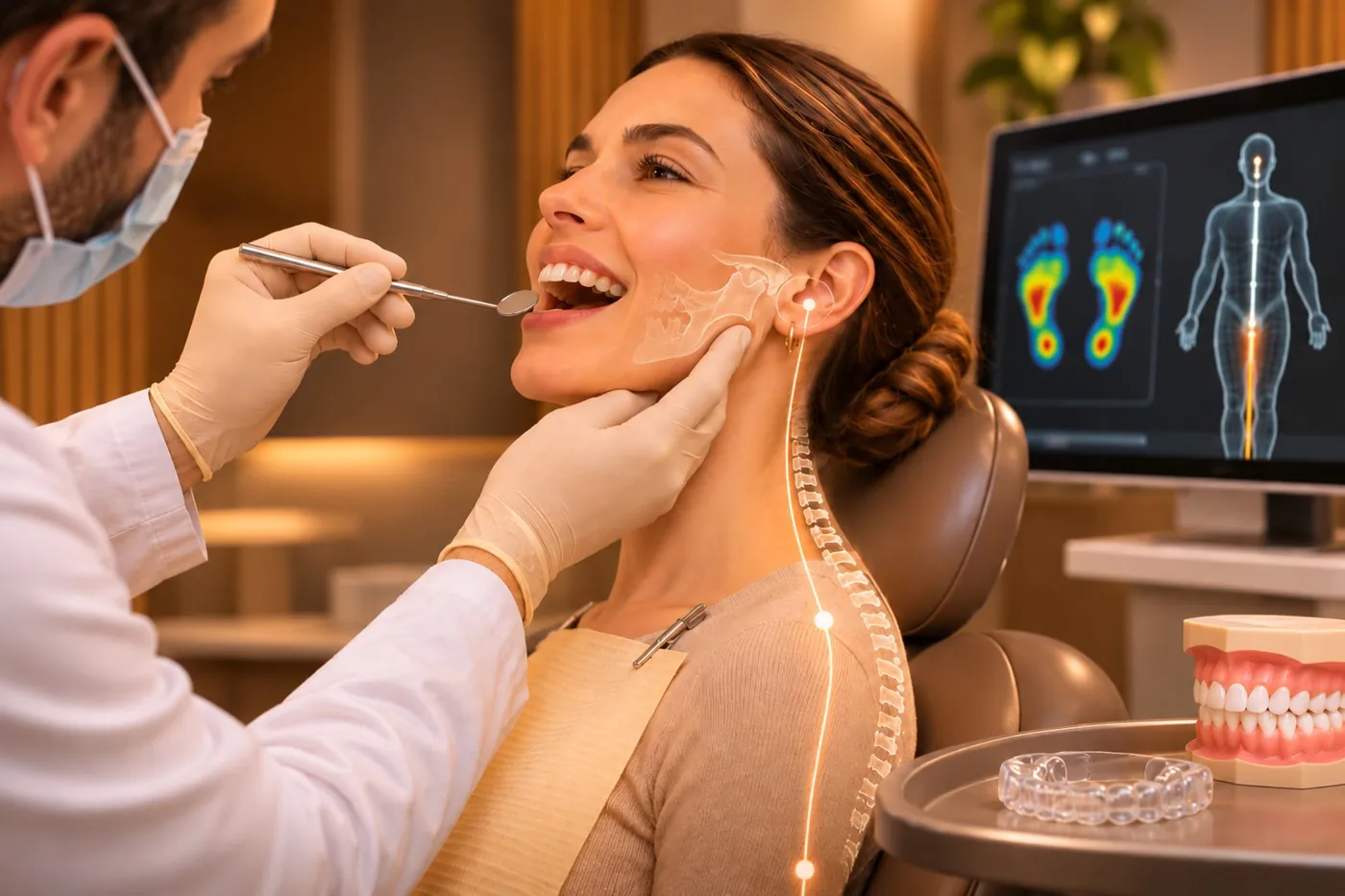
What occlusal posturology is
It is the branch of dentistry and posturology that studies the relationship between the stomatognathic system (teeth, occlusion, temporomandibular joint or TMJ and chewing muscles) and the postural tone system that keeps us upright and balanced.
Its aim is to prevent, detect and treat postural problems that originate in the mouth, and the other way round: posture problems that end up affecting the bite.
How your mouth affects your posture
To keep you balanced, your brain constantly receives information from several “sensors”: the eyes, the feet, the inner ear, the skin and joints… and also the mouth, through the contacts between your teeth and the position of your jaw.
When the bite is unbalanced (interfering contacts, a shifted jaw, atypical swallowing or mouth breathing), the body may compensate with tension and asymmetries. Conversely, a poor posture held over time can change the way you bite.
Occlusal posturology in sport
In sport, this relationship matters even more. An unbalanced bite can create muscle asymmetries, affect balance and stability, increase fatigue and the risk of injury, and reduce precision in technical movements.
That is why more and more athletes are having an occlusal-postural assessment. An occlusal splint or mouthguard designed from that assessment can help distribute forces better and improve postural control — and in some cases, performance too.
How we work
1. Interview and examination: bite, wear, TMJ, muscles, breathing and swallowing.
2. Simple posture and balance tests to see whether, and how much, the mouth is involved.
3. A tailored plan: bite adjustment, splint, sports mouthguard or orthodontics, depending on the case.
4. Coordination with physiotherapists, podiatrists or orthoptists when the problem doesn't come from the mouth alone. We explain what you can realistically expect and monitor your progress.
Frequently asked questions
Who is occlusal posturology for?
For people with jaw, neck or back pain or tension that may be linked to their bite, for people who clench their teeth, and for athletes who want to look after their balance and prevent injuries.
Will it fix back pain on its own?
Not always. Posture depends on many factors, so we assess whether the mouth plays a role and, when needed, work with other professionals.
What treatments are used?
Depending on the case: bite adjustments, custom splints, mouthguards designed for your sport or orthodontics. We always explain the options and the quote first.
Can it improve my sports performance?
In some athletes, balancing the bite improves stability and reduces fatigue. We don't promise results: we assess your case and tell you what is reasonable to expect.
Is the assessment painful?
No. It is an examination of your mouth plus some simple posture and balance tests, with nothing invasive.