
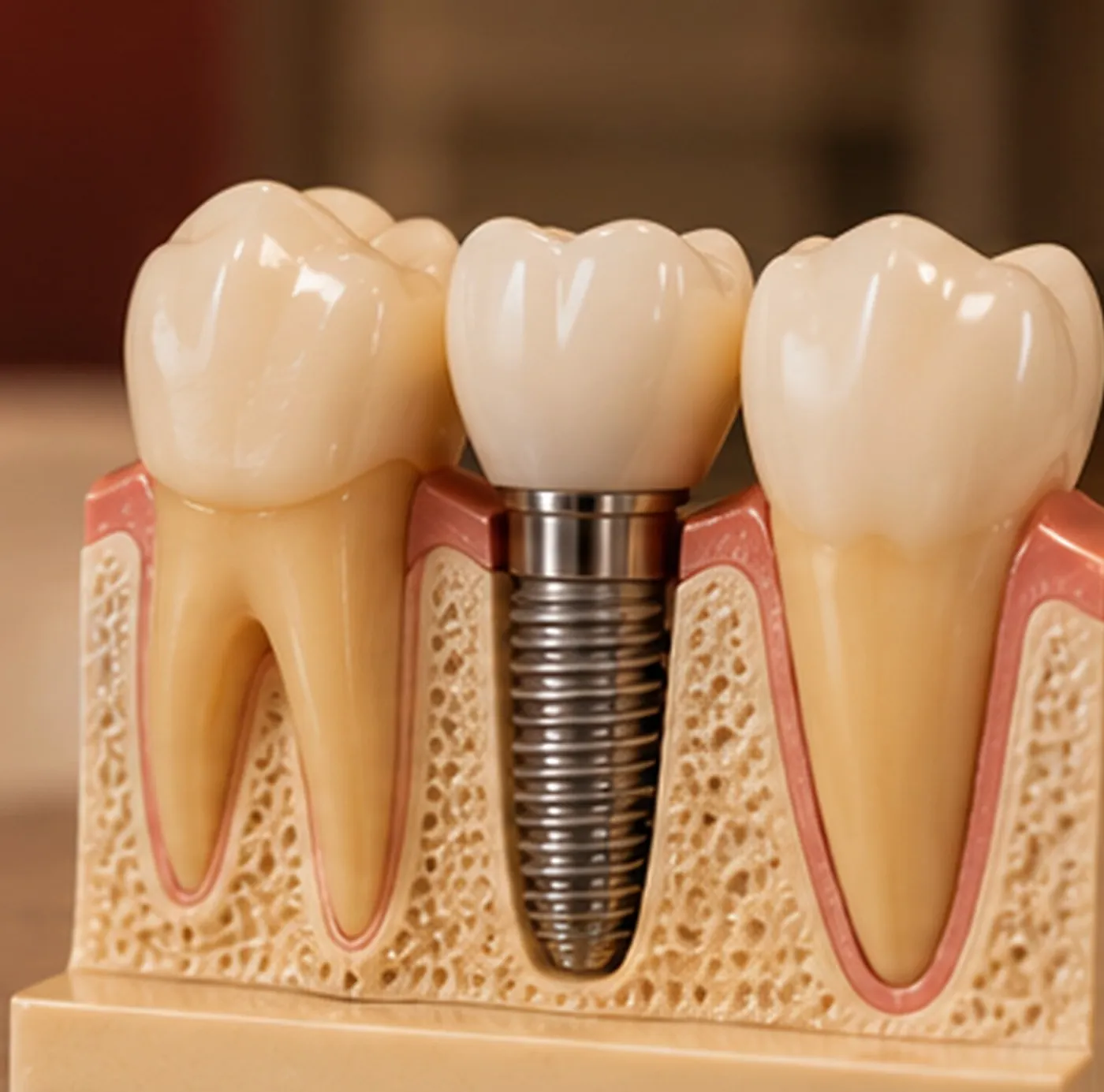
Before the implant: planning
We assess your general health, the amount of bone available and the position of nearby structures with imaging tests. If bone is lacking, we explain alternatives such as a bone graft or sinus lift. You then receive a phased plan and a fixed quote, with no small print.
On the day of the procedure
The implant is placed under local anaesthetic and is usually less uncomfortable than most people expect. You can listen to your own music during the procedure, and we give you clear instructions for the following days. Once the implant has bonded with the bone, we fit the final crown.
Solutions for every case
A single implant for one tooth, an implant bridge when several teeth are missing, or a fixed or removable implant-supported denture to restore a full arch. In every case we aim for a natural result that's easy to clean.
Maintenance, the key to success
Implants can't decay, but the gum and bone around them can become inflamed if plaque builds up. Once the crown is in place, we show you how to clean it with interdental brushes or a water flosser and schedule regular check-ups with professional hygiene. That way we protect your investment and your long-term oral health. If you smoke, we'll help you look at ways to reduce the risk, as tobacco is one of the biggest factors affecting healing.
Frequently asked questions
Does getting an implant hurt?
Not during the procedure, thanks to local anaesthetic. In the following days there may be mild swelling, controlled with the medication we prescribe.
How long does an implant last?
With good hygiene and regular check-ups, an implant can last many years. Maintenance is key.
Can anyone have implants?
Most people can, but certain medical conditions, smoking or lack of bone require a specific assessment. We look at this during planning.
Will I be left with a gap while the implant heals?
In many cases we can fit a temporary tooth so there's no visible gap during the process.
How long until I have the final tooth?
It depends on bone quality and location, but usually a few months. We'll tell you in your treatment plan.